Robotic or Laparoscopic Nephrectomy
The Key Things to Know:
A robotic or laparoscopic nephrectomy is a minimally invasive operation to remove all or part of a kidney through small incisions using advanced camera and instrument technology. It is performed to treat kidney cancer, large benign tumours, or a severely damaged non-functioning kidney.
What It Is
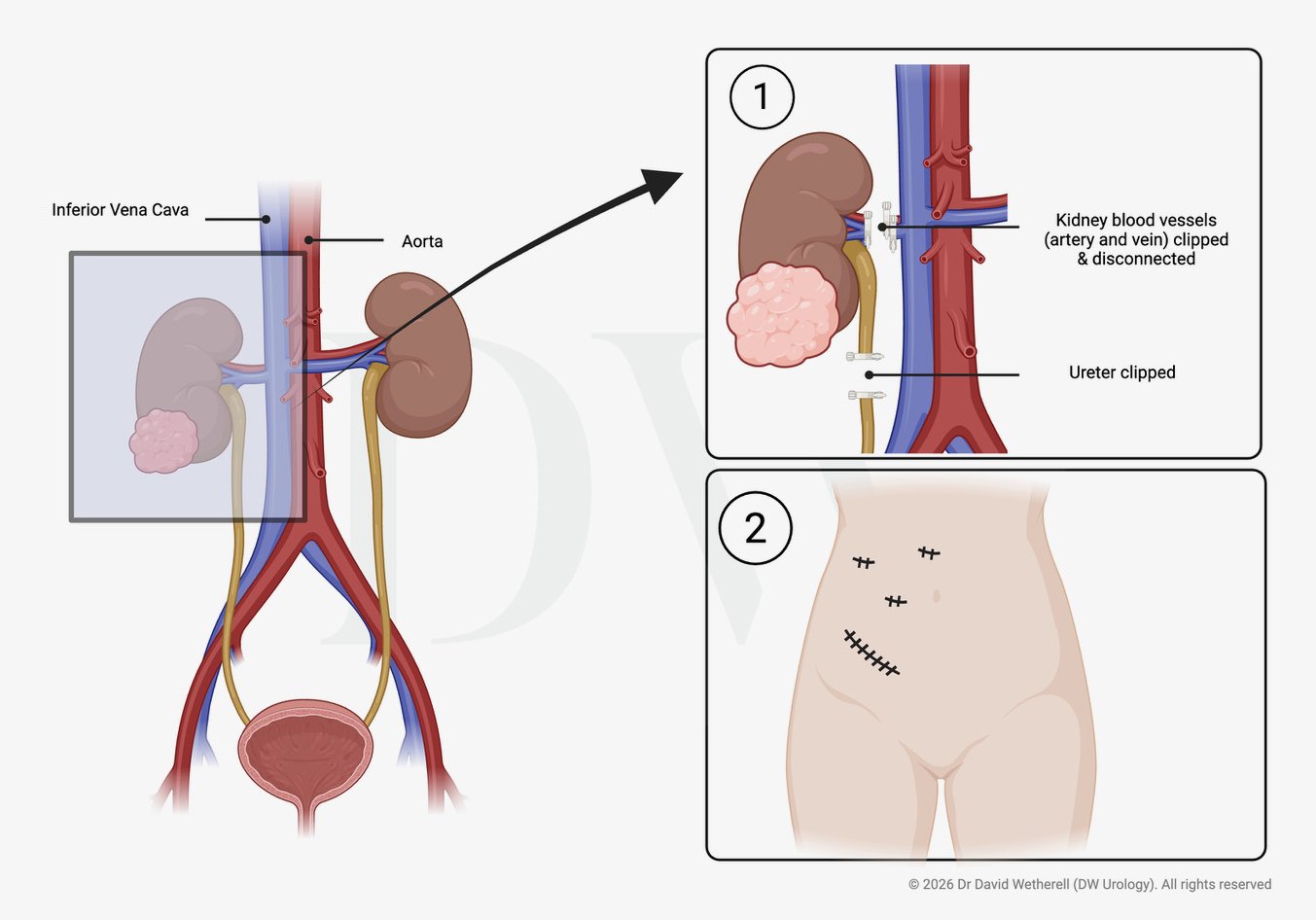
During the procedure, several small incisions (usually 5–10 mm) are made in the abdomen. The surgeon uses a high-definition camera and fine robotic or laparoscopic instruments to carefully dissect and remove the kidney. The specimen is removed through a small extraction site.
The robotic approach allows greater precision, stability, and 3D vision, which can improve outcomes compared with standard laparoscopy.
When It's Needed
Nephrectomy may be recommended for:
Localised kidney cancer (most common reason)
A non-functioning or severely scarred kidney
Large benign tumours or cysts
Severe kidney damage from obstruction or infection
Surgery Diagram
Benefits
Minimally invasive – smaller incisions, less pain
Shorter hospital stay (typically 1–3 days)
Faster recovery compared to open surgery
Low complication and transfusion rates (<5%)
Excellent cancer control for localised tumours
Risks
Bleeding (≈2–4%)
Infection or wound complications (≈3–5%)
Injury to nearby organs or bowel (rare, <1%)
Hernia at incision site (≈1–2%)
For radical nephrectomy – loss of kidney function (remaining kidney usually compensates)
What to Expect After Surgery
Most patients stay in hospital for 1–3 days. A urinary catheter and sometimes a drain are used briefly. You can expect mild discomfort around the incision sites and some fatigue for a week or two. Walking and light activities are encouraged early. Avoid heavy lifting for 4–6 weeks.
FAQs
-
Usually not – the remaining kidney typically maintains normal function.
-
Most patients return to normal daily activity within 2–3 weeks and full recovery within 4–6 weeks.
-
Both are safe and effective; the robotic approach offers greater precision and vision, which may reduce blood loss and speed recovery.
Robotic or Laparoscopic Nephrectomy
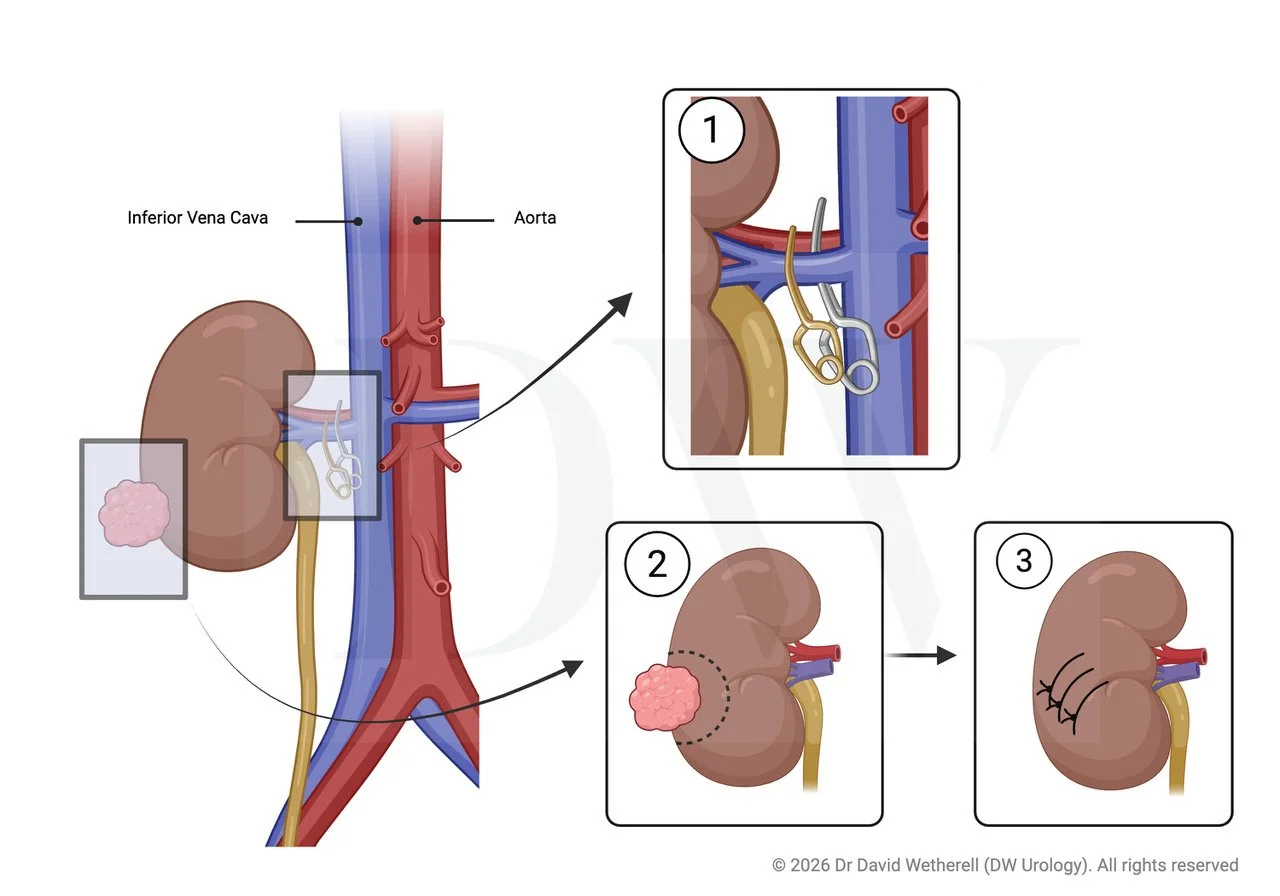
Robotic Partial Nephrectomy
Robotic Nephroureterectomy
Robotic or Laparoscopic Nephrectomy
Robotic Partial Nephrectomy
Robotic Nephroureterectomy
Discover Expert Urological Care
I specialise in precision urology using the latest robotic and minimally invasive techniques. Explore my approach, my procedures, and the care I provide at every stage of your journey.